
Lobster bisque recipe lovers often search for a dish that delivers luxurious texture and dependable results, and this version creates a silky pot of comfort with very little effort. You get a creamy seafood soup that feels elegant, yet it comes together with simple steps that build steady depth. The process highlights how shells create homemade lobster stock, which adds a rich foundation that supports every spoonful. You also enjoy measurable benefits like consistent thickness, balanced seasoning, and a finish that stays smooth after reheating.
I grew up in a Southern kitchen where seafood meant celebration, and those family gatherings taught me how thoughtful cooking turns simple ingredients into something meaningful. Later, restaurant work showed me why classic French bisque techniques never fail when handled with patience and curiosity.
You can now follow this guide to create a bowl that blends flavor, comfort, and skill with ease.
Ingredients and Substitutions
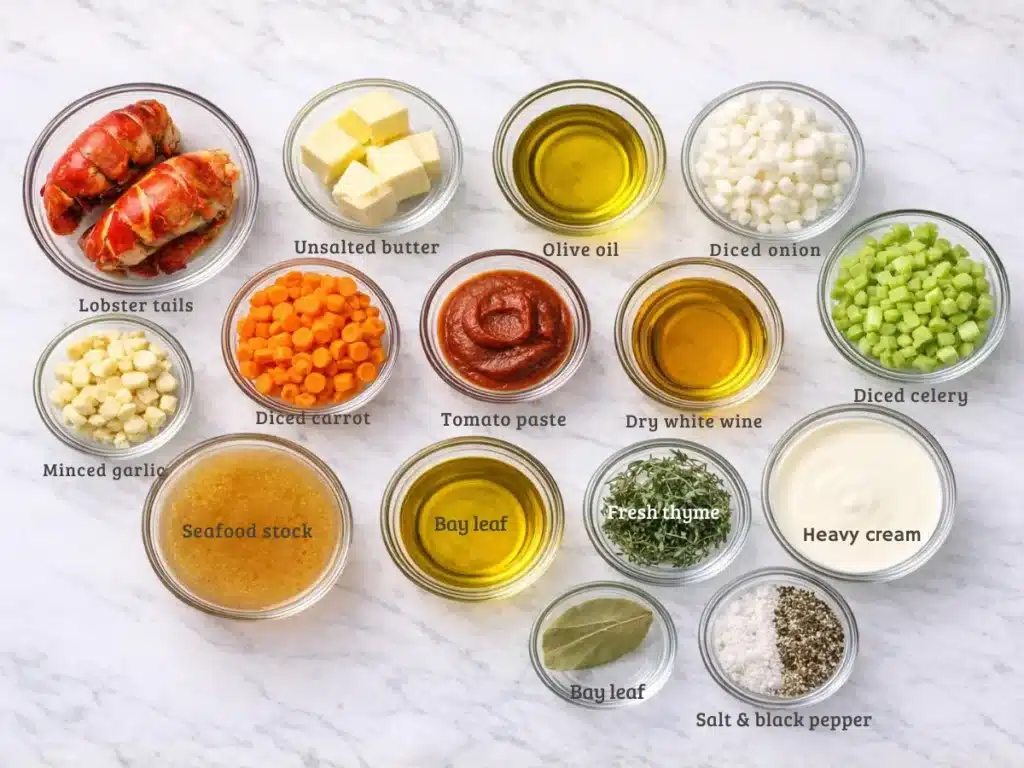
The ingredients for this lobster bisque work together to create structure, aroma, and dependable depth. You build flavor in layers because each component supports the creamy base and reinforces the rich seafood flavor. When you combine aromatics with shells, you create homemade lobster stock that gives the dish a strong backbone and keeps the texture balanced.
Ingredients
- 2 cooked lobster tails, shells reserved
- 3 tablespoons unsalted butter
- 1 tablespoon olive oil
- 1 small onion, diced
- 1 carrot, diced
- 1 celery stalk, diced
- 2 garlic cloves, minced
- 2 tablespoons tomato paste
- 1 quarter cup dry white wine
- 1 quarter cup brandy
- 3 cups seafood or lobster stock
- 1 bay leaf
- 1 teaspoon fresh thyme
- 1 half cup heavy cream
- Salt and pepper to taste
Substitutions
- You may use shrimp shells if lobster shells are unavailable.
- Half and half can replace cream for a lighter finish.
- Rice blended into the soup can thicken it without flour.
- Vegetable stock works when you need a milder base.
These ingredients give you a classic structure while still allowing flexibility for dietary needs or pantry changes.
Step by Step Instructions

These steps guide you toward a balanced pot of creamy seafood soup by building flavor in steady layers. You begin with aromatics, and then you develop depth through slow cooking that extracts strength from the shells and herbs.
- Warm butter and olive oil in a large pot over medium heat until the mixture melts and turns glossy. Add onion, carrot, and celery, and cook for eight minutes until they soften and release their aroma.
- Stir in garlic and tomato paste, and cook for one minute to create a deep base that supports the rich seafood flavor.
- Add the lobster shells, and let them toast for two minutes to unlock aroma. Deglaze with white wine and brandy, and scrape the bottom to lift flavorful bits. This approach also mirrors techniques used in the Seafood Boil Sauce recipe, which relies on steady heat to draw out natural sweetness.
- Pour in seafood stock, thyme, and bay leaf. Simmer for twenty minutes to build homemade lobster stock.
- Remove shells, then puree the soup until smooth, and return it to the pot.
- Stir in cream, and season with salt and pepper. Warm gently until the bisque reaches a silky finish.
These steps keep the texture consistent while protecting the delicate flavors.
Variations and Flavor Twists
You can adjust this lobster bisque to match your mood, pantry, or curiosity, and each variation still holds the soft texture of a creamy seafood soup. These twists build new dimensions without losing the structure of a classic French bisque, which always relies on slow simmering and careful seasoning.
A Cajun inspired version adds paprika, cayenne, and a touch of smoked butter. The deeper spice echoes the warmth found in the Seafood Cajun Boil Recipe, and it brings a bold edge that works well with sweet lobster meat. You can also finish this version with a splash of sherry for balance.
A Mediterranean twist uses roasted tomatoes, fennel seed, and fresh basil. These additions lighten the bisque while still supporting a steady base created through homemade lobster stock. The herbs keep the broth bright, and the tomato enriches the natural sweetness of the shells.
A faster weeknight option relies on bottled seafood stock and pre cooked lobster meat. You still blend to achieve a silky texture, and this method reduces preparation time while keeping strong flavor. With any version, you can fold in lemon zest or crème fraîche at the end for gentle acidity or added richness.
These variations help you customize the soup while still preserving its structure and dependable flavor.
Side Dishes and Pairings
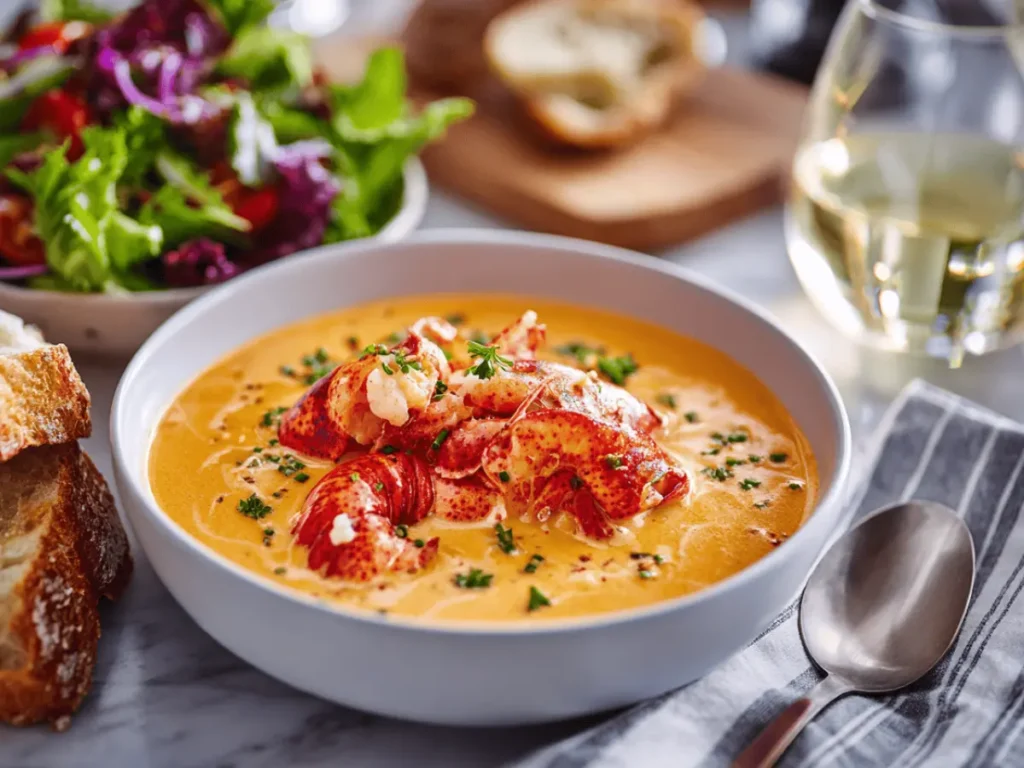
Lobster bisque works well with simple sides that highlight its depth and keep the bowl enjoyable from the first spoonful to the last. Since the soup delivers a rich seafood flavor, you want accompaniments that bring contrast, texture, or freshness. These pairings help balance the meal without competing with the creamy base.
A crisp green salad with citrus dressing brightens each bite. Roasted asparagus or sautéed spinach creates a warm and earthy option that supports the subtle sweetness of the shell based broth. You can also serve crusty bread for dipping, because the tender crumb absorbs the liquid easily and keeps each bite satisfying.
For a seafood themed spread, you can pair the bisque with lighter dishes such as the Shrimp Garlic Recipe. The simple seasoning in that dish adds gentle contrast while allowing the soup to remain the centerpiece.
Wine pairings can guide the meal even further. Chardonnay delivers warmth and a mellow finish. Sauvignon blanc brings acidity that cuts through richness. Champagne or dry sparkling wine creates a refreshing lift that pairs beautifully with the velvety broth.
Lobster Bisque Recipe Pairing Comparison Table
| Side Option | Benefit | Best For |
|---|---|---|
| Crisp green salad | Fresh contrast | Lighter meals |
| Crusty bread | Texture and soaking | Comfort focused dinners |
| Roasted vegetables | Warm earthy notes | Balanced plates |
Nutritional Benefits
Lobster bisque offers comfort and nourishment in one bowl, and the nutritional strengths come from a balance of protein, healthy fats, and natural minerals. Lobster provides lean protein that supports steady energy while keeping the soup satisfying without excess heaviness. When you simmer shells to create homemade lobster stock, you unlock minerals that blend smoothly into the broth and reinforce the gentle body of this creamy seafood soup.
The cream adds richness, but the total portion remains moderate because the recipe focuses on structure rather than excess fat. Lobster contributes nutrients such as vitamin B12 and selenium, which support overall wellness and steady metabolism. The aromatics also supply small but meaningful amounts of fiber and natural antioxidants.
This soup delivers comfort while staying grounded in whole ingredients that support balanced eating. When served with vegetables or a fresh salad, it becomes an approachable meal that blends indulgence with practical nourishment.
Nutrition Overview Table
| Component | Benefit | Notes |
|---|---|---|
| Lean lobster protein | Supports muscle and recovery | Naturally low in fat |
| Minerals from shells | Helps maintain healthy cells | Released during simmering |
| Cream | Adds texture and flavor | Use lighter cream if preferred |
Frequently Asked Questions (FAQ)
What does lobster bisque have in it?
Lobster bisque usually includes lobster shells, lobster meat, aromatics such as onion, carrot, and celery, plus tomato paste, wine, stock, cream, and herbs. These ingredients work together to build depth and create a smooth texture. The shells provide most of the flavor because they release natural sweetness during simmering.
What is the secret to great bisque?
The real secret lies in slow simmering and thorough extraction from the shells. When you take time to build the base, you allow natural richness to develop. Puréeing until completely smooth also ensures a consistent texture. Seasoning at the end helps maintain balance without overwhelming delicate flavors.
What ingredient makes a bisque?
The defining ingredient is the shell of the featured seafood. Lobster shells create the structure and body by releasing aroma and minerals during cooking. While cream thickens the soup, the shells remain essential because they shape the character of every version, whether traditional or adapted.
What type of cream for lobster bisque?
Most cooks use heavy cream because it delivers thickness and a steady finish. It holds up during gentle heating and helps maintain a smooth surface. If you want a lighter result, you can use half and half, though the final texture will be slightly less full.
Conclusion
This lobster bisque recipe brings comfort, depth, and a steady sense of craft to your table because it joins dependable technique with meaningful flavor. You build the soup through slow simmering and thoughtful blending, and these steps create a creamy seafood soup that feels both refined and welcoming. The balance of aromatics, cream, and homemade lobster stock keeps the texture smooth while allowing the character of the ingredients to remain clear.
You now have a method that reflects the structure of a classic French bisque while allowing room for curiosity through variations and personalized touches. Each bowl offers gentle sweetness from the shells and steady warmth from the slow cooking process, and the final result carries a rich seafood flavor without heaviness. You can serve it for gatherings, quiet dinners, or any moment that calls for something comforting.
You can try new variations whenever you want to explore different directions. A spiced version brings heat, while a vegetable focused version lightens the broth. Every approach keeps the foundation intact so that flavor and texture remain consistent.
Use this recipe as a base for creativity and joy in the kitchen, and return to it whenever you want a dish that blends nourishment with reliable elegance.
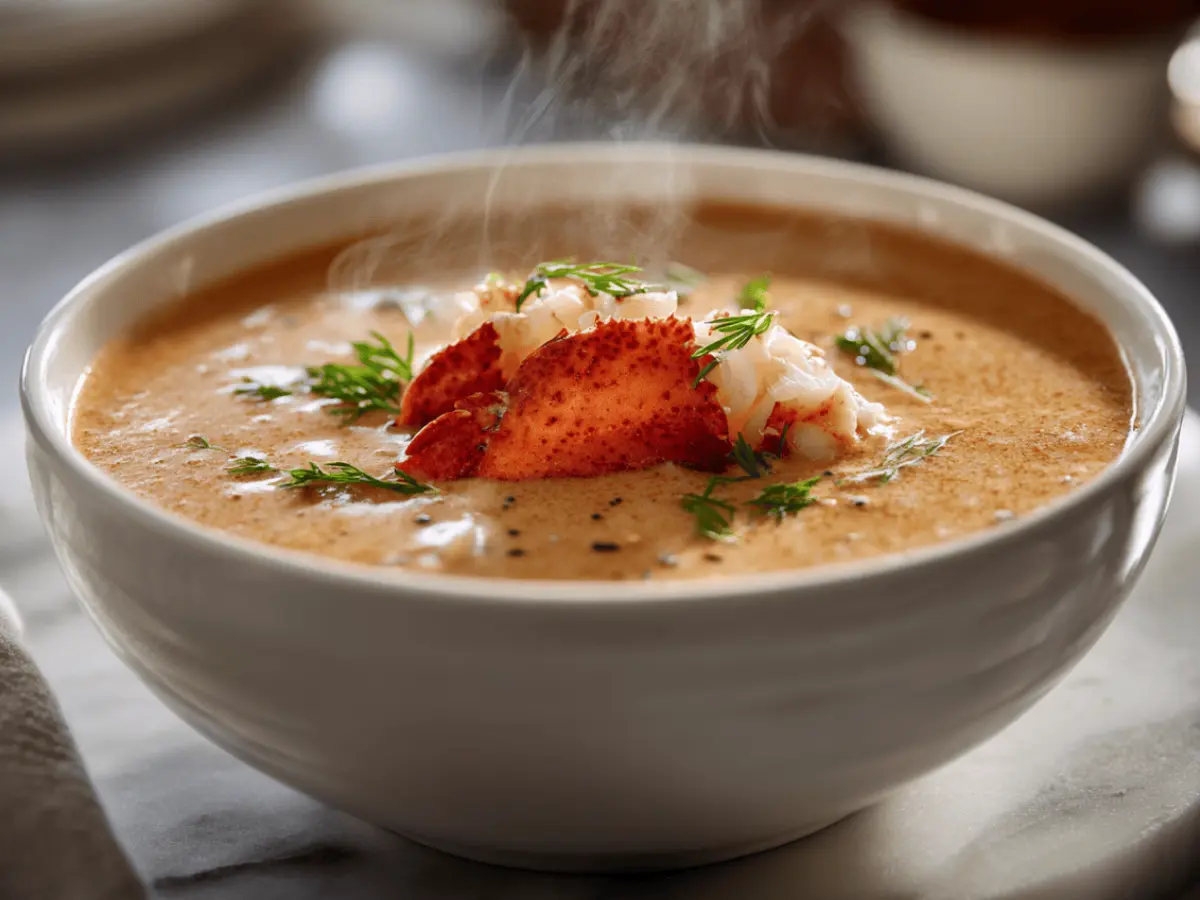
Lobster Bisque Recipe
Ingredients
Method
- Warm butter and olive oil in a large pot over medium heat until glossy, then add onion, carrot, and celery and cook for eight minutes until softened.
- Stir in garlic and tomato paste and cook for one minute to deepen the base.
- Add the lobster shells and toast for two minutes to release aroma, then deglaze with white wine and brandy and scrape the pot to lift flavorful bits.
- Pour in seafood stock, thyme, and bay leaf, then simmer for twenty minutes to build flavor.
- Remove shells, puree the soup until smooth, then return it to the pot.
- Stir in cream, season with salt and pepper, and warm gently until silky.