
Squid ink pasta seafood recipe delivers a bold Italian dish that combines rich seafood flavor with dramatic black pasta and a quick restaurant style sauce. This recipe creates a satisfying meal in about thirty minutes while providing high protein from fresh seafood and bright Mediterranean flavor from garlic, olive oil, and herbs.
Because squid ink contains natural marine umami, it blends beautifully with shrimp, scallops, mussels, and calamari. As a result, every bite tastes deeply savory while still fresh and balanced. Many cooks also love the striking color because it turns a simple pasta dinner into an elegant centerpiece.
I first learned the magic of Italian squid ink pasta during a coastal market trip while searching for fresh seafood. The combination of briny pasta and sweet shellfish felt unforgettable. Since then, this seafood squid ink pasta recipe has remained one of my favorite dishes to cook for friends.
Now let us explore how to make it step by step.
Ingredients and Substitutions
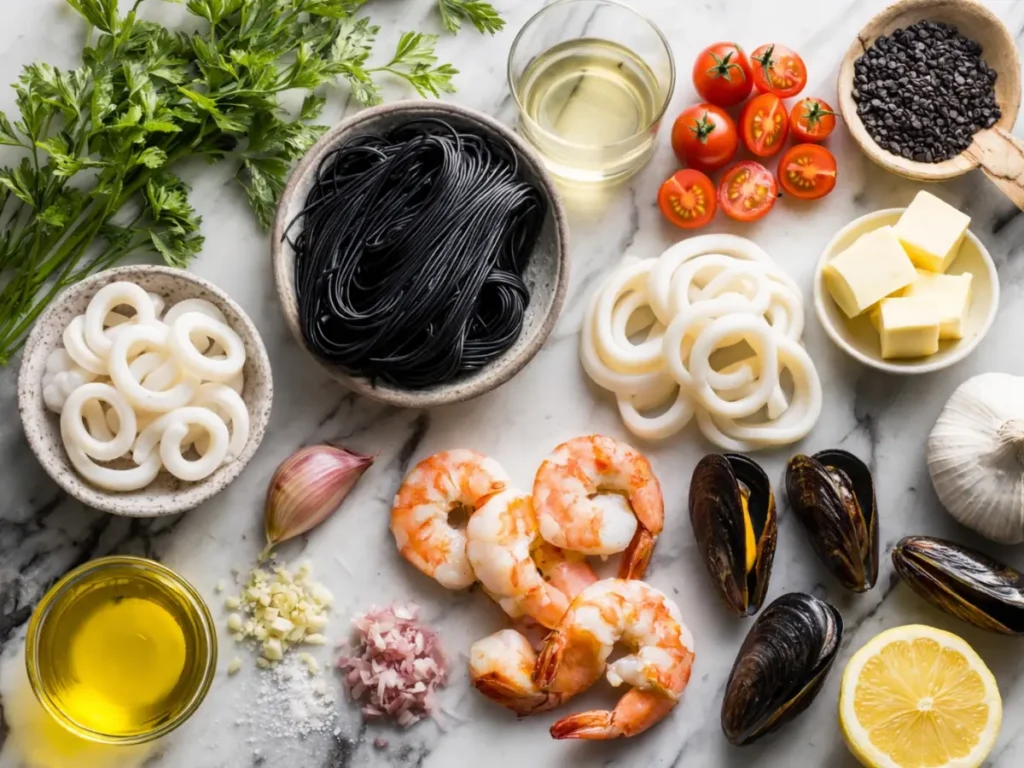
A great squid ink pasta seafood recipe relies on fresh seafood, simple aromatics, and balanced Mediterranean flavors. Each ingredient plays a role in building a rich yet bright sauce that highlights the natural squid ink pasta taste.
Ingredients
- 12 oz squid ink pasta : spaghetti or linguine works best
- 8 oz shrimp : peeled and deveined
- 6 oz scallops : fresh sea scallops preferred
- 6 oz calamari : sliced into rings
- 8 oz mussels or clams : cleaned and debearded
- 3 cloves garlic : finely minced
- 1 small shallot : finely chopped
- 2 tbsp extra virgin olive oil
- ½ cup dry white wine : such as Pinot Grigio
- 1 cup cherry tomatoes : halved
- 1 tbsp lemon juice : freshly squeezed
- 2 tbsp fresh parsley : chopped
- 1 tbsp butter : optional for finishing
- Salt and black pepper : to taste
These ingredients create a classic seafood squid ink pasta sauce that feels both elegant and approachable. If you enjoy creamy seafood sauces, you might also explore ideas from this helpful guide on best sauce for lobster ravioli, which highlights similar seafood flavor combinations.
Substitutions
- Use gluten free pasta if you avoid wheat. The sauce works with many pasta shapes.
- Replace scallops with extra shrimp or firm white fish.
- Vegetarians can use charcoal colored pasta and sautéed mushrooms instead of seafood.
- Add anchovy paste for deeper umami if you enjoy stronger Italian seafood flavors.
These flexible options make this squid ink pasta recipe easy to adapt for different kitchens.
Step by Step Instructions
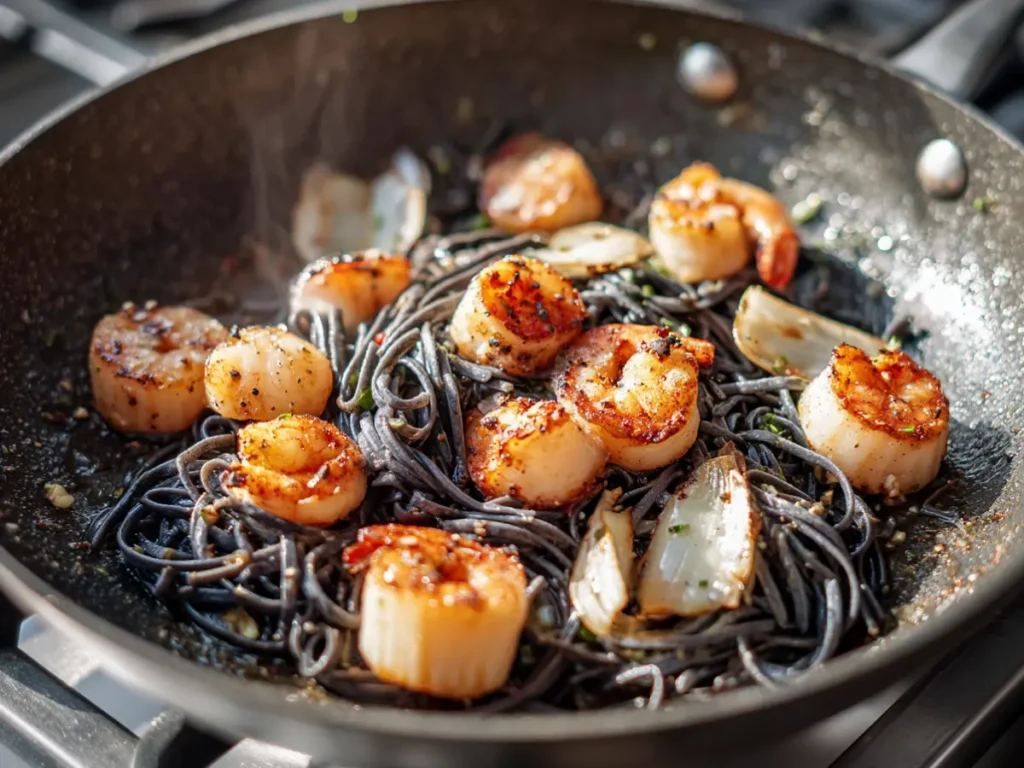
This squid ink pasta seafood recipe comes together quickly when you cook each ingredient in the correct order. Because seafood cooks fast, careful timing keeps the texture tender while the sauce develops a rich Mediterranean flavor.
Cooking Steps
1. Cook the pasta
Bring a large pot of well salted water to a boil. Add the squid ink pasta and cook until just tender, usually about nine minutes. Stir occasionally so the pasta cooks evenly. Before draining, reserve half a cup of the pasta water to help finish the sauce.
2. Prepare the seafood
Rinse the shrimp, scallops, calamari, and mussels under cold water. Pat everything dry with paper towels. Dry seafood browns better in the pan and develops deeper flavor during cooking.
3. Sauté the aromatics
Heat olive oil in a wide skillet over medium heat. Add minced garlic and chopped shallot. Cook gently for about one minute while stirring until the mixture becomes fragrant.
4. Sear the scallops
Place scallops in the hot skillet with space between them. Cook until a golden surface forms, then turn them once and cook briefly on the other side. Transfer them to a plate.
5. Cook shrimp and calamari
Add shrimp and calamari to the skillet and cook for about two minutes until the shrimp turn pink. For another seafood idea, see this shrimp garlic recipe.
6. Finish the pasta
Pour white wine into the pan and allow it to simmer briefly. Add cherry tomatoes and the cooked squid ink pasta. Toss everything with parsley and lemon juice, return the scallops, and add a splash of pasta water to create a smooth sauce.
Variations and Flavor Twists
A squid ink pasta seafood recipe offers plenty of room for creativity. Because squid ink pasta carries a deep ocean flavor, it pairs naturally with herbs, spices, and creamy elements. With small adjustments, the same dish can feel Mediterranean, spicy, or rich.
Mediterranean Herb Style
For a fresh coastal version, increase the herbs and citrus. Add fresh basil along with parsley and finish the pasta with extra lemon zest. This approach highlights the natural sweetness of shrimp and scallops. At the same time, the bright herbs balance the bold squid ink pasta taste.
Garlic Chili Seafood Version
If you enjoy stronger flavors, introduce chili flakes while cooking the garlic and shallot. The gentle heat spreads through the sauce and complements the seafood. Calamari and shrimp work especially well here because they absorb the garlic aroma quickly.
Creamy Seafood Pasta Version
For a smoother texture, stir two tablespoons of cream into the sauce before combining the pasta. The cream softens the intense squid ink flavor and creates a silky coating for the seafood. This version feels slightly richer while still keeping the seafood squid ink pasta balanced.
| Seafood | Average Cooking Time | Ideal Result |
|---|---|---|
| Shrimp | 2 to 3 minutes | Pink and tender |
| Scallops | About 2 minutes per side | Golden crust |
| Calamari | 1 to 2 minutes | Soft texture |
| Mussels | 3 to 4 minutes | Shells fully opened |
Side Dishes and Pairings
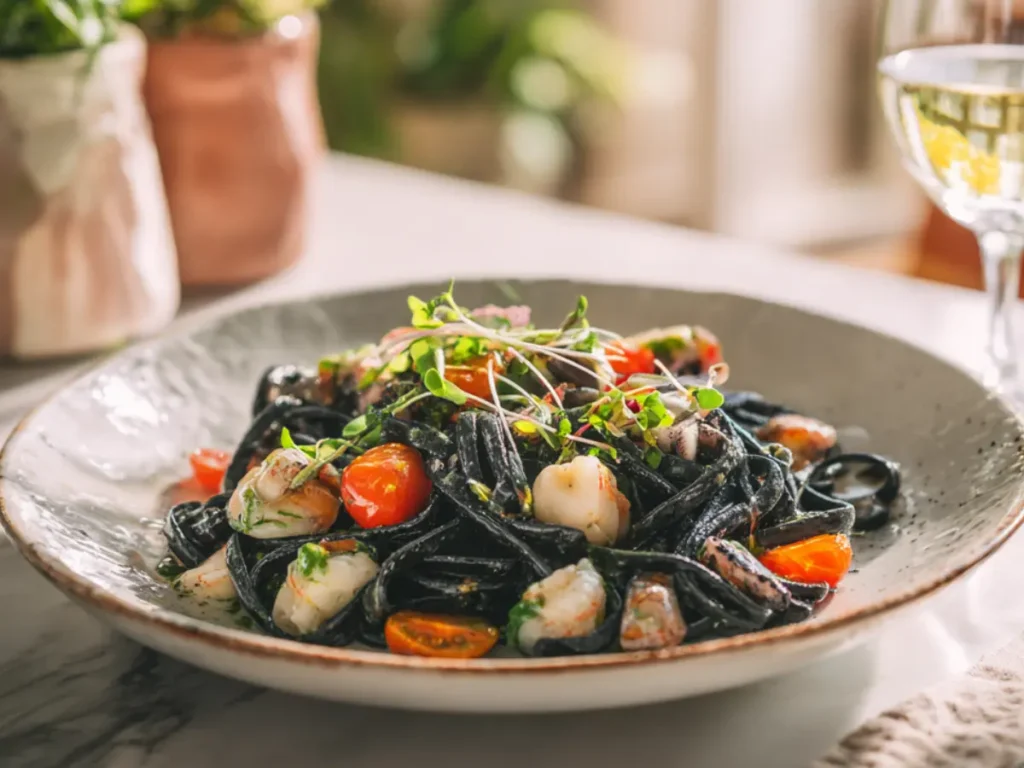
A squid ink pasta seafood recipe becomes even more memorable when served with thoughtful side dishes. Because the pasta carries a deep ocean flavor, lighter sides help balance the richness while keeping the meal elegant and satisfying.
Fresh Salads
Crisp salads pair beautifully with seafood squid ink pasta. For example, a simple arugula salad with olive oil, lemon juice, and shaved parmesan creates a refreshing contrast. In addition, a cucumber and tomato salad adds brightness and acidity that balances the bold squid ink pasta taste.
Bread and Mediterranean Sides
Warm bread often completes a seafood pasta dinner. Garlic bread or toasted sourdough works well because it absorbs the flavorful sauce. Roasted vegetables such as asparagus, zucchini, or bell peppers also complement Italian squid ink pasta without overpowering the seafood.
Seafood Inspired Pairings
If you want to build a seafood themed meal, consider adding another small seafood dish. For instance, a Southern style platter like this seafood cajun boil recipe offers bold spices and variety while keeping the ocean inspired theme.
| Wine Type | Flavor Profile | Why It Works |
|---|---|---|
| Pinot Grigio | Light and crisp | Balances seafood flavors |
| Sauvignon Blanc | Bright acidity | Cuts through richness |
| Vermentino | Citrus and mineral notes | Complements squid ink pasta |
Nutritional Benefits
A squid ink pasta seafood recipe offers more than dramatic color and bold flavor. It also delivers a nutrient rich meal that combines seafood protein, healthy fats, and essential minerals. Because seafood contains valuable nutrients, this dish supports a balanced Mediterranean style diet.
Seafood such as shrimp, scallops, and mussels provides high quality protein that helps maintain muscle and supports overall body function. In addition, many shellfish contain vitamin B12, which plays an important role in nerve health and energy metabolism. As a result, seafood squid ink pasta can contribute to a satisfying and nourishing meal.
Another important benefit comes from omega 3 fatty acids. These healthy fats appear naturally in many types of seafood. Omega 3 nutrients support heart health and help maintain healthy cholesterol levels when included regularly in balanced meals.
Squid ink itself contains small amounts of iron and antioxidants. These compounds support immune function and help protect cells from oxidative stress. Although the quantity remains modest, it still contributes additional nutritional value to the dish.
| Nutrient | Main Source in Recipe | Key Benefit |
|---|---|---|
| Protein | Shrimp, scallops, mussels | Supports muscle health |
| Omega 3 fatty acids | Seafood | Supports heart health |
| Vitamin B12 | Shellfish | Supports nerve function |
| Iron | Squid ink | Supports oxygen transport |
Frequently Asked Questions (FAQ)
What goes well with squid ink pasta?
Squid ink pasta pairs well with light Mediterranean sides that balance its rich ocean flavor. Fresh salads, roasted vegetables, and crusty bread complement the dish nicely. Many cooks also serve seafood squid ink pasta with crisp white wine because acidity refreshes the palate and highlights the seafood flavors.
What does squid ink pair with?
Squid ink pairs naturally with seafood because both share briny ocean flavors. Shrimp, scallops, calamari, and mussels work especially well. Garlic, olive oil, lemon, and fresh herbs also enhance the flavor. These ingredients create balance and help the squid ink pasta recipe taste bold yet clean.
Does squid ink pasta taste like seafood?
Squid ink pasta taste often surprises people. It does not taste strongly fishy. Instead, it offers a mild ocean flavor with subtle saltiness and natural umami. When combined with seafood and herbs, the pasta adds depth and richness rather than overpowering the rest of the ingredients.
Why is it called marry me shrimp pasta?
The name marry me shrimp pasta comes from the idea that the dish tastes so delicious it could inspire a marriage proposal. The creamy sauce, garlic, and seafood create a comforting flavor that many people find irresistible. The name reflects the emotional reaction the meal can create.
Conclusion
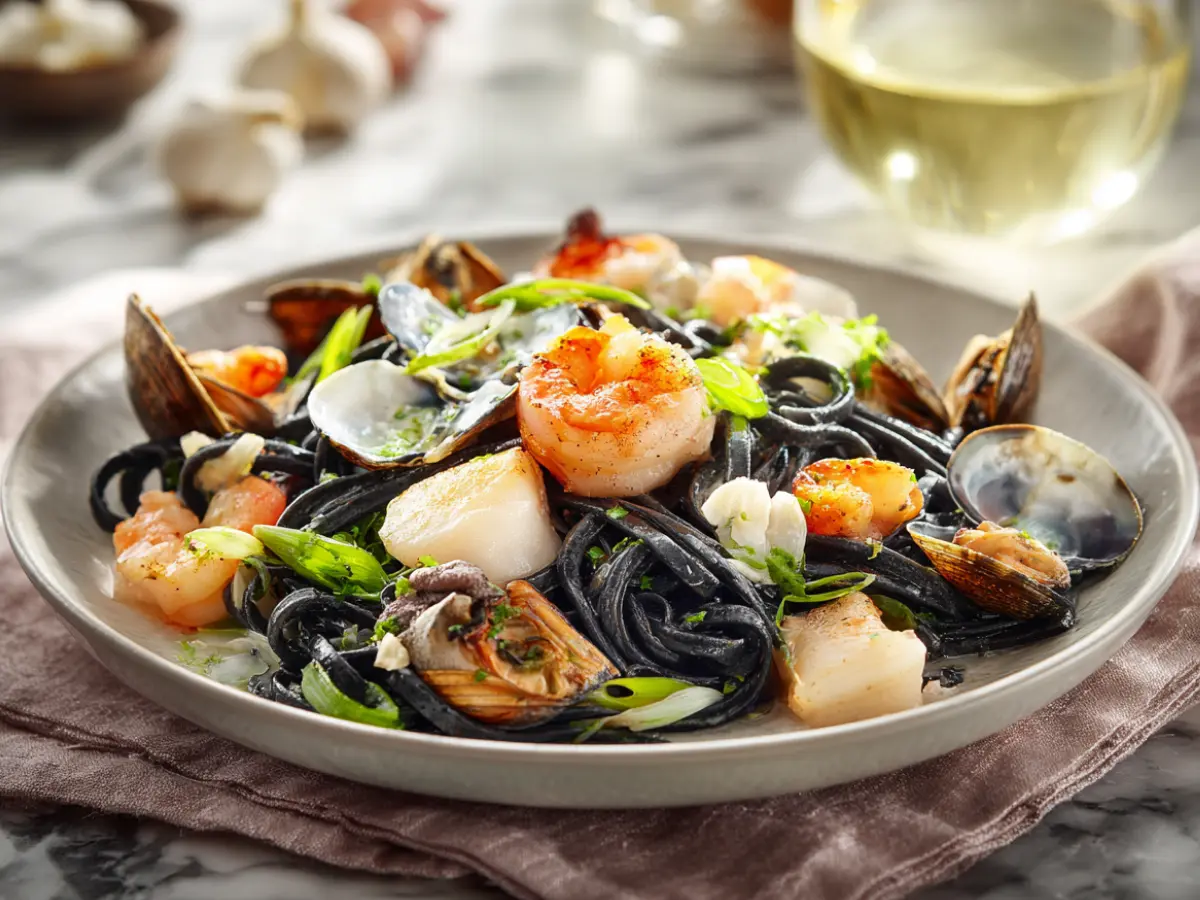
A squid ink pasta seafood recipe offers a memorable way to enjoy bold ocean flavors with elegant Italian inspiration. The dramatic black pasta creates visual appeal, while the combination of shrimp, scallops, calamari, and mussels builds deep savory flavor. At the same time, garlic, olive oil, lemon, and herbs keep the dish bright and balanced.
Because the recipe uses simple ingredients and quick cooking methods, it works well for both weeknight dinners and special gatherings. The seafood cooks in only a few minutes, which helps preserve tenderness and natural sweetness. As a result, each bite highlights the rich yet delicate squid ink pasta taste.
This seafood squid ink pasta also encourages creativity in the kitchen. You can adjust herbs, spices, or sauce textures to match your personal preference. For example, some cooks prefer a lighter Mediterranean style, while others enjoy a creamy seafood sauce.
Ultimately, Italian squid ink pasta celebrates the connection between fresh seafood and simple cooking techniques. When prepared carefully, the dish transforms everyday ingredients into a striking and flavorful meal.
If you enjoy exploring seafood recipes, this squid ink pasta recipe offers a rewarding dish that feels both comforting and impressive at the table.
Ingredients
Method
- Bring a large pot of salted water to a boil and cook the squid ink pasta until just tender. Reserve half a cup of pasta water before draining.
- Rinse shrimp, scallops, calamari, and mussels under cold water. Pat them dry thoroughly with paper towels.
- Heat olive oil in a wide skillet over medium heat. Add chopped shallot and minced garlic and cook for about one minute until fragrant.
- Add scallops to the skillet and cook until golden on each side. Remove and set aside.
- Add shrimp and calamari to the skillet and cook for about two minutes until shrimp turn pink and firm.
- Pour white wine into the skillet and simmer briefly. Add cherry tomatoes and cooked squid ink pasta. Toss with parsley and lemon juice, return scallops, and add a splash of pasta water to create a smooth sauce.