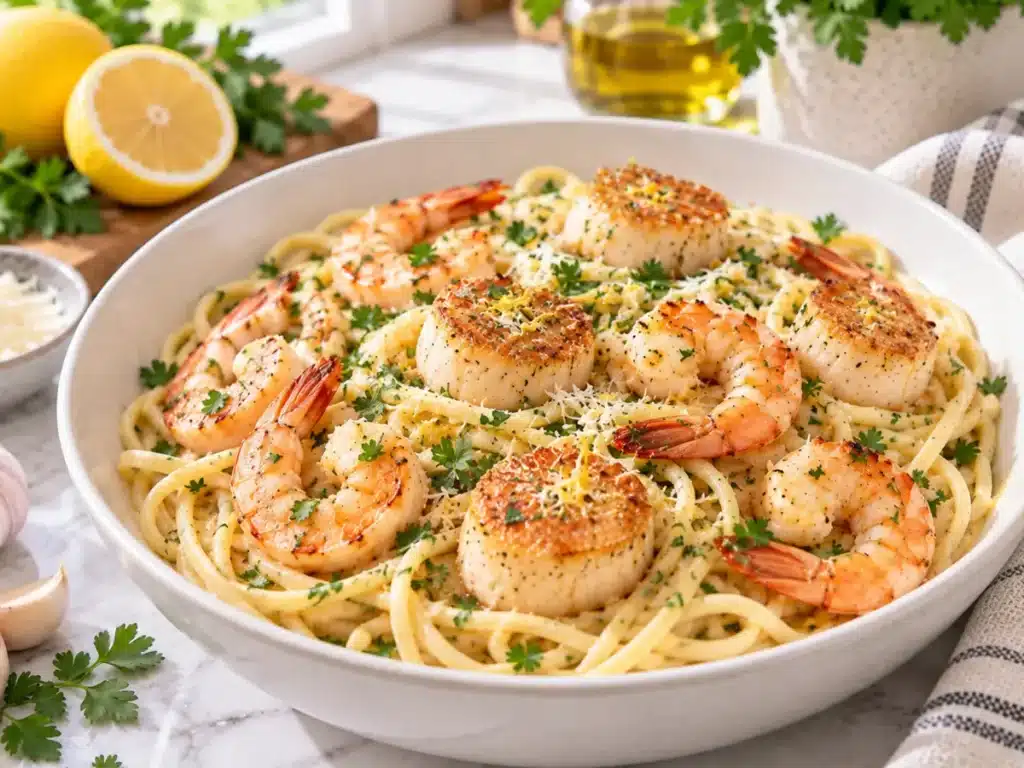
Shrimp and scallop pasta brings tender seafood, golden scallops, and a bright garlic lemon sauce together in a simple dinner that cooks quickly. This seafood pasta delivers rich flavor without requiring complicated techniques or a long ingredient list.
Why You’ll Love This Recipe
- The shrimp and scallops cook in minutes, which keeps dinner practical on busy evenings.
- The garlic lemon sauce uses simple ingredients while creating fresh, savory flavor.
- Careful cooking gives you juicy shrimp and tender scallops instead of tough seafood.
I learned early that seafood rewards attention more than complexity. In professional kitchens, I also saw how a hot pan and careful timing could transform a few fresh ingredients into something memorable.
That balance fits the way I love to cook for friends and family. Simple food can still feel special when every ingredient has a purpose. Next, a few preparation details will help you get the texture right from the first batch.
What to Know Before Cooking Shrimp and Scallop Pasta
Good preparation matters because shrimp and scallops cook very quickly. First, pat both completely dry with paper towels. Moisture creates steam, while a dry surface helps you develop beautifully seared scallops.
Next, avoid overcrowding the skillet. Give each scallop enough space to touch the hot surface. Otherwise, released moisture can prevent a golden crust from forming.
Timing matters just as much. Shrimp and scallops can turn firm when they stay over heat too long. Therefore, cook each seafood separately, then return both to the pasta near the end.
Finally, prepare the garlic, lemon, butter, seasonings, and reserved pasta water before you start searing. Once the skillet gets hot, the recipe moves quickly. With everything ready, you can focus on browning the seafood and controlling its texture instead of searching for ingredients.
What You Need for This Recipe
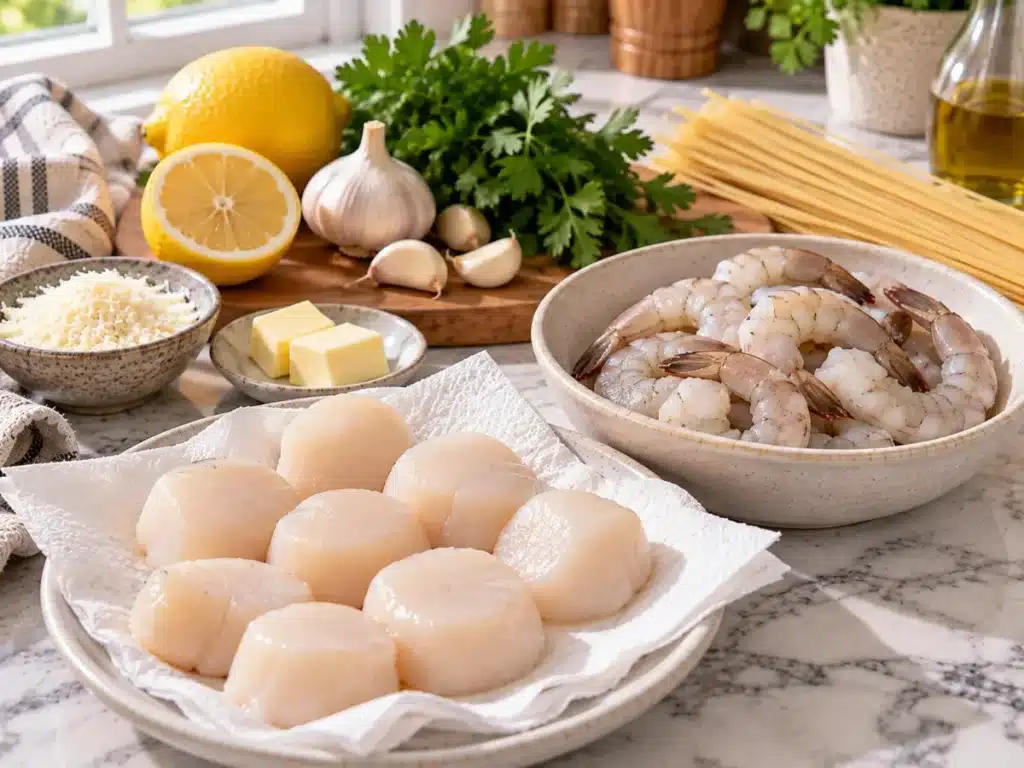
A few fresh ingredients create most of the flavor in this dish. Choose good seafood and fresh lemon because their flavors stay noticeable in the finished pasta.
- 8 ounces linguine: cook until al dente
- 8 ounces large shrimp: peeled and deveined
- 8 ounces sea scallops: side muscles removed
- 1 tablespoon olive oil
- 2 tablespoons unsalted butter
- 4 cloves garlic: finely minced
- 1 medium lemon: zest and 2 tablespoons juice
- ⅓ cup Parmesan: freshly grated
- 2 tablespoons fresh parsley: chopped
- ¼ teaspoon red pepper flakes
- ½ teaspoon salt
- ¼ teaspoon black pepper
- ½ cup reserved pasta water
Choose plump sea scallops that smell clean and mild. Likewise, large shrimp make timing easier because they do not cook quite as rapidly as smaller varieties.
Fresh lemon adds acidity that balances the butter and Parmesan. Meanwhile, freshly grated Parmesan melts more smoothly than many packaged grated cheeses.
For substitutions, swap linguine for spaghetti or fettuccine. You can also replace some butter with olive oil for a lighter sauce. For extra vegetables, add baby spinach or halved cherry tomatoes when you prepare the sauce.
How to Cook Shrimp and Scallop Pasta Step by Step
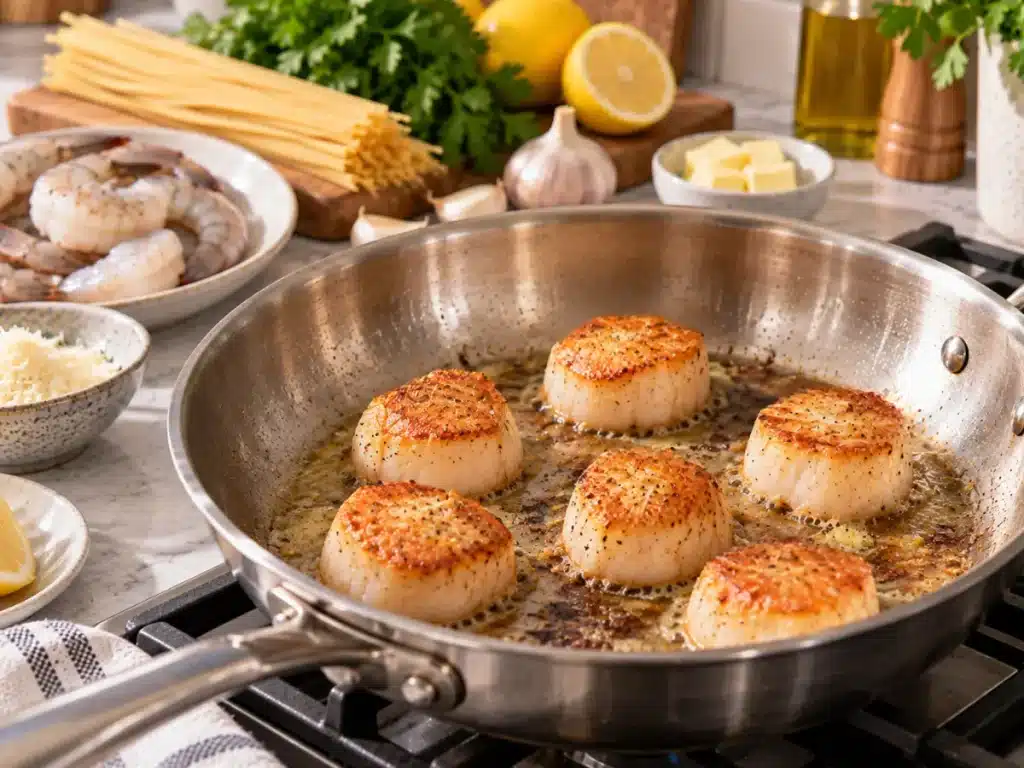
The goal is to build flavor while protecting the delicate texture of the seafood. Work in stages so nothing stays over heat longer than necessary.
- Cook the pasta. Boil the linguine in salted water until al dente, according to package timing. Reserve ½ cup pasta water, then drain.
- Prepare the seafood. Pat the shrimp and scallops completely dry. Season them with the salt and black pepper.
- Sear the scallops. Heat olive oil in a wide skillet over medium high heat. Add scallops with space between them. Cook for about 2 minutes per side until golden. Transfer them to a plate. Properly seared scallops should release easily once a crust forms.
- Cook the shrimp. Add 1 tablespoon butter and the shrimp. Cook for 1 to 2 minutes per side. For another simple technique, see this garlic shrimp recipe. Transfer the shrimp to the plate.
- Build the sauce. Reduce the heat to medium. Add the remaining butter, garlic, and red pepper flakes. Cook for 30 seconds. Stir in lemon zest, lemon juice, Parmesan, and ¼ cup pasta water to create the garlic lemon sauce.
- Finish the dish. Add linguine and parsley. Toss until glossy, adding more pasta water as needed. Return the shrimp and scallops, toss gently, then serve immediately.
How to Know It Is Perfectly Cooked
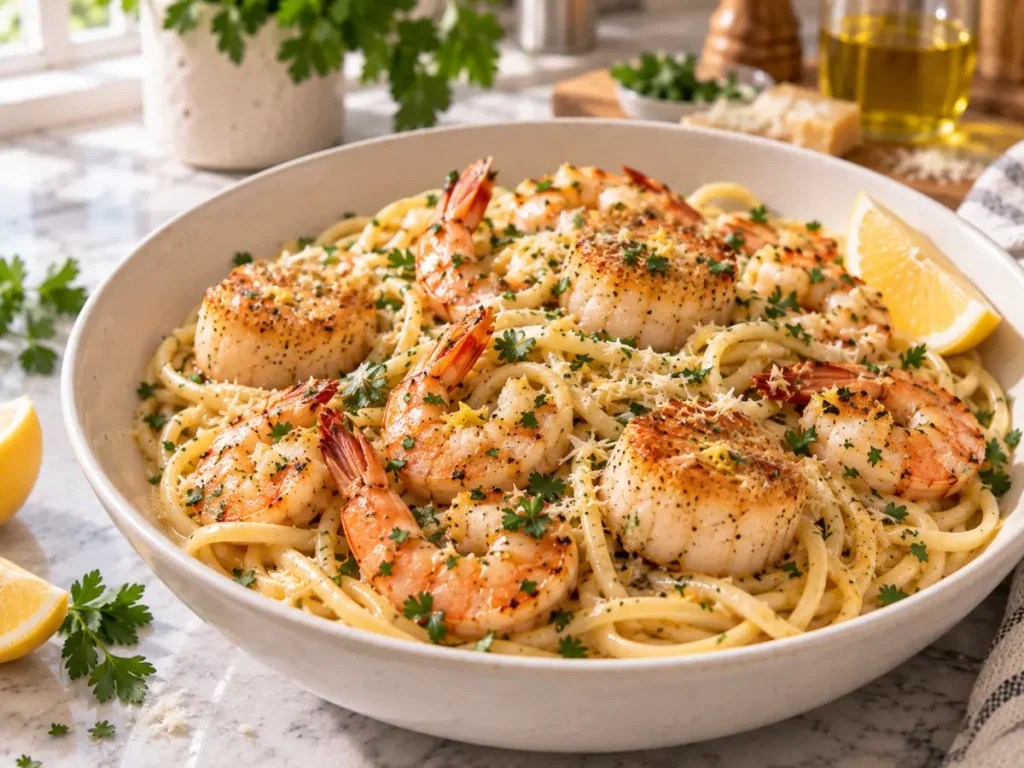
Visual cues make it easier to protect the tender texture of shrimp and scallops. Watch the seafood closely because even another minute can change the result.
Properly seared scallops develop a deep golden surface while the sides turn opaque. The center should feel tender and slightly springy when you press it gently. If scallops become very firm throughout, they have cooked too long.
Shrimp provide different clues. They change from translucent gray to opaque pink and white as they cook. Their bodies should form a loose curve. However, a tightly curled shape often signals that the shrimp stayed over heat too long.
| Seafood | Appearance | Texture | Common Overcooking Sign |
|---|---|---|---|
| Scallops | Golden crust and opaque sides | Tender and springy | Firm throughout |
| Shrimp | Pink and opaque | Juicy and tender | Tight curl and rubbery bite |
Remember that shrimp and scallops continue cooking briefly after leaving the skillet. Therefore, remove them as soon as they reach the right texture. Returning them only briefly at the end keeps the seafood warm without sacrificing tenderness.
Easy Ways to Change This Meal
Once you understand the basic method, you can easily adjust this seafood pasta to match your mood. Keep the seafood cooking technique the same, then change the sauce or vegetables.
For a richer version, add ¼ cup heavy cream after cooking the garlic. Reduce it gently, then stir in the Parmesan. If you enjoy that style, this creamy shrimp pasta offers another useful approach.
For a fresher variation, add 1 cup halved cherry tomatoes with the garlic. Then fold in 2 cups baby spinach before adding the pasta. The vegetables add color and freshness without overpowering the seafood.
For extra heat, increase the red pepper flakes to ½ teaspoon. Add another squeeze of lemon before serving to keep the flavors bright.
| Variation | Main Addition | Flavor Result |
|---|---|---|
| Creamy Parmesan | ¼ cup heavy cream | Rich and savory |
| Tomato Spinach | Tomatoes and spinach | Fresh and bright |
| Spicy Lemon | Extra pepper flakes and lemon | Zesty and spicy |
For a dairy free version, use olive oil instead of butter and omit Parmesan. These simple changes let you adjust the meal while keeping the core cooking method familiar.
What to Serve With Shrimp and Scallop Pasta
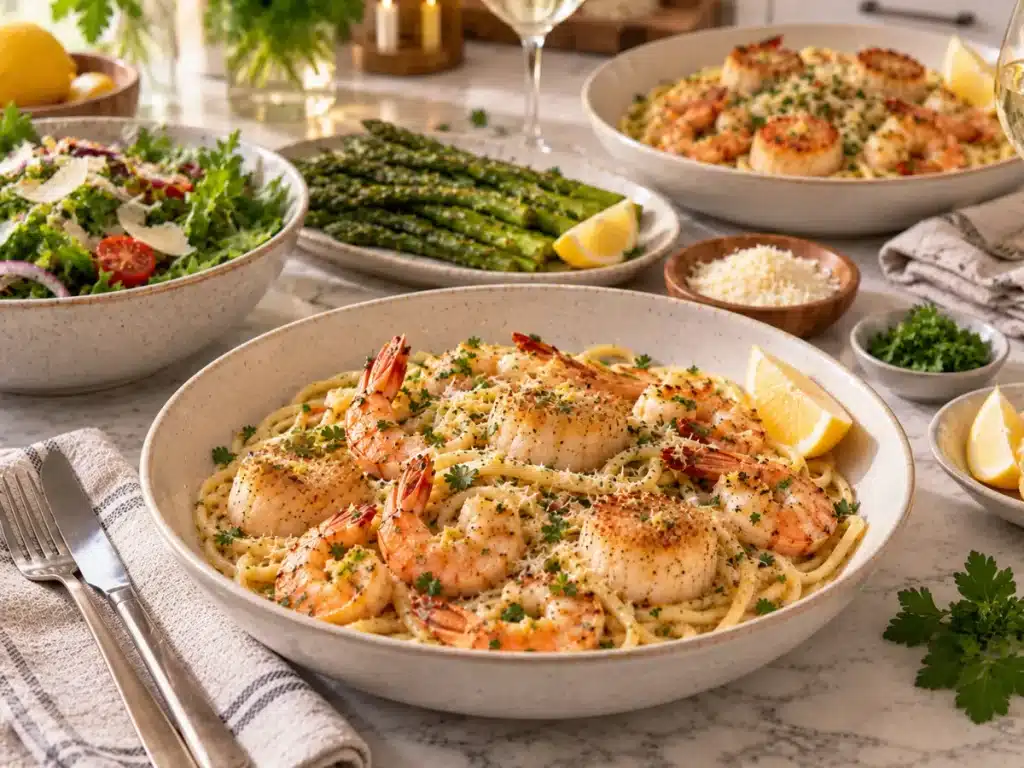
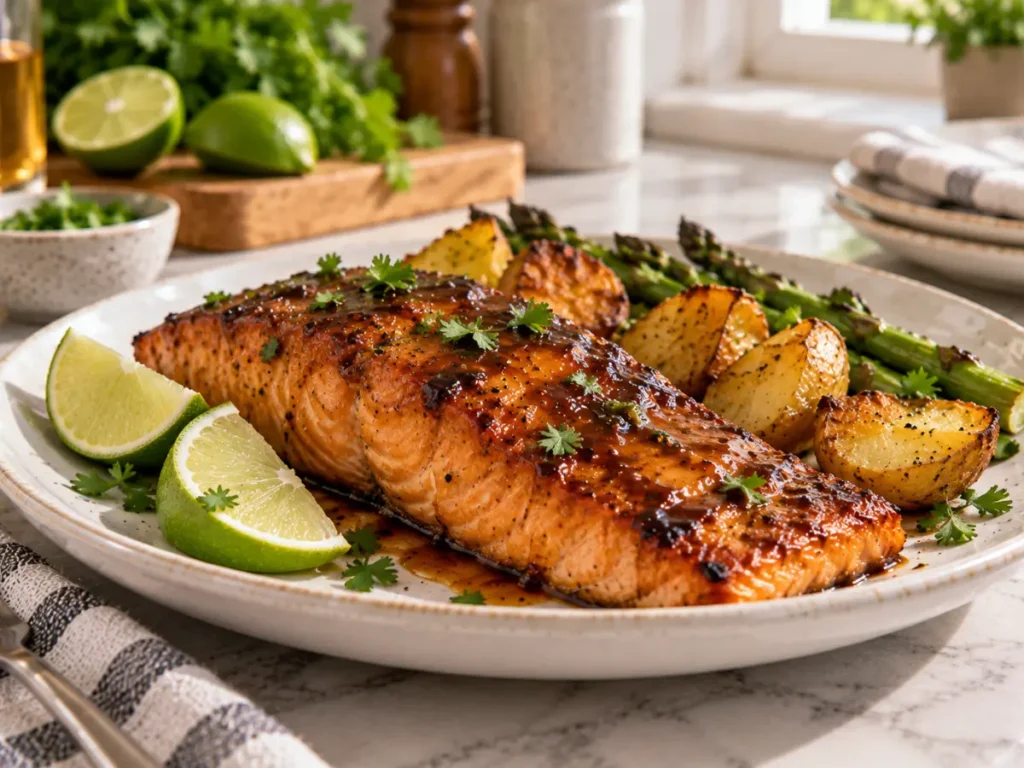
Keep the sides simple so the delicate shrimp and scallops remain the focus. Roasted asparagus, steamed broccoli, or crisp green beans add color and texture without competing with the pasta.
A fresh salad also works beautifully. Toss mixed greens with cucumber, tomatoes, and a light lemon dressing. For something more comforting, serve warm bread alongside the pasta. It helps capture the buttery sauce left on the plate. You can also explore the best sauce for shrimp when you want a different flavor pairing.
For a balanced plate, serve a moderate portion of pasta with plenty of vegetables. The seafood provides the main protein, while colorful vegetables add freshness and make the meal feel complete.
Store leftovers in a covered container and refrigerate them promptly. Reheat the pasta gently over low heat with a splash of water. However, avoid repeated heating because shrimp and scallops can quickly become firm. For food safety, do not leave seafood pasta sitting at room temperature for more than two hours.
Frequently Asked Questions
Can you cook shrimp and scallops together?
You can cook shrimp and scallops in the same skillet, but cooking them separately gives you better control. Scallops need strong direct heat to develop a golden crust. Shrimp often cook faster. Therefore, cook each seafood separately, then combine both briefly with the pasta before serving.
What sauce goes well with shrimp and scallop pasta?
A garlic lemon sauce works especially well because its bright acidity balances the richness of the seafood, butter, and Parmesan. You can also make a creamy Parmesan sauce or add tomatoes for freshness. Keep the seasoning balanced so the delicate flavor of the shrimp and scallops remains noticeable.
How do you keep scallops from becoming rubbery?
Pat scallops completely dry before cooking and use a properly heated skillet. Then sear them for about two minutes per side. Remove them once they develop a golden crust and tender center. Finally, return them to the pasta only briefly because additional heat can quickly make scallops firm.
What pasta goes best with shrimp and scallops?
Linguine works particularly well because its long strands hold a light seafood sauce without overwhelming the shrimp and scallops. Spaghetti and fettuccine also work well. Choose pasta with enough structure to carry the sauce, then cook it until al dente so it keeps a pleasant texture.
Final Thoughts Before You Try It
Shrimp and scallop pasta proves that a memorable seafood dinner does not need complicated ingredients or hours in the kitchen. Careful timing does most of the work. When you dry the seafood well, heat the skillet properly, and cook each protein separately, you protect its tender texture.
The sauce keeps the meal equally simple. Fresh lemon, garlic, butter, Parmesan, and pasta water create plenty of flavor without hiding the seafood. Meanwhile, vegetables or a fresh salad can round out the plate with color and contrast.
Most importantly, trust what you see while cooking. Look for a golden crust on the scallops and a juicy, opaque appearance on the shrimp. Those visual cues often tell you more than the clock.
Once you master that rhythm, this seafood pasta becomes easy to adapt for weeknight dinners, relaxed gatherings, or special occasions. Gather your ingredients, heat your skillet, and enjoy how a few thoughtful techniques can turn a simple pasta dinner into something worth sharing.
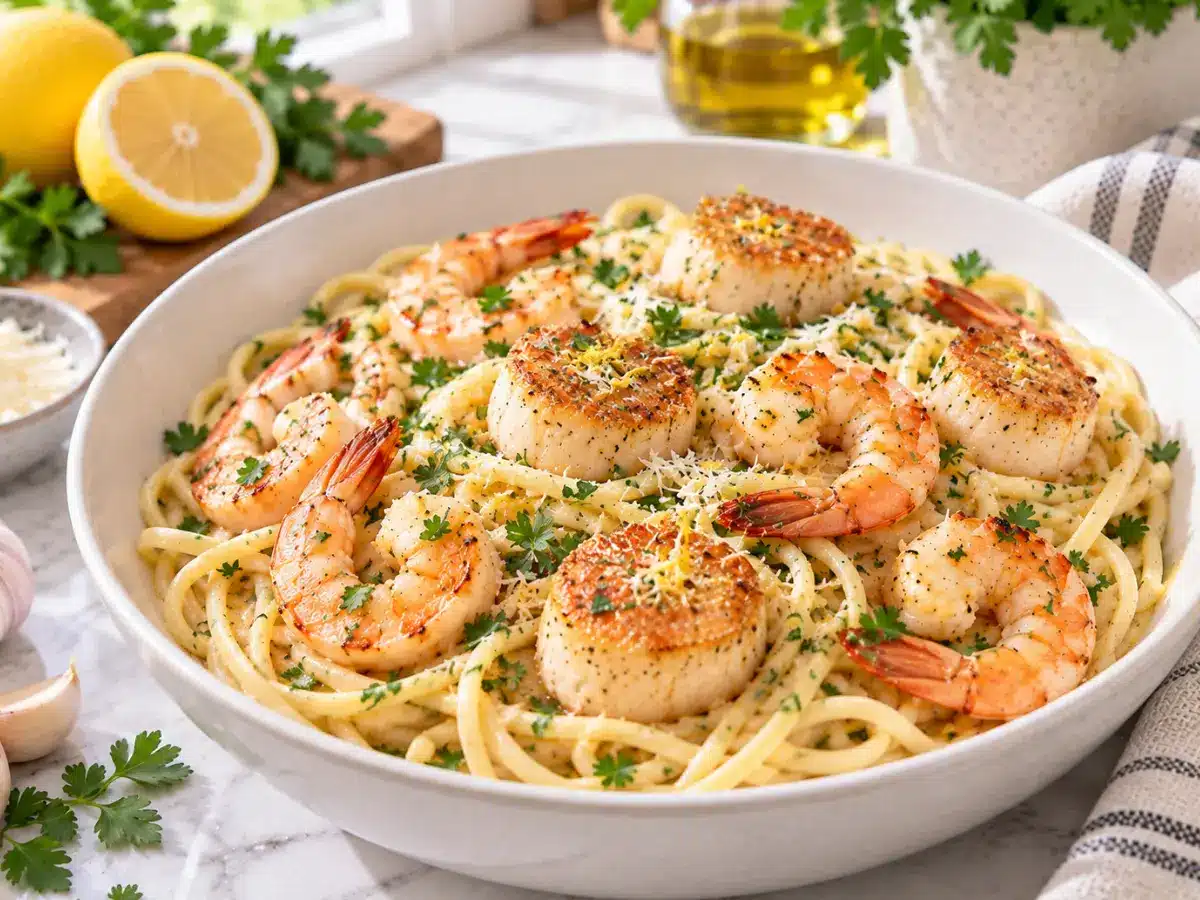
Shrimp and Scallop Pasta
Ingredients
Method
- Cook the pasta. Boil the linguine in salted water until al dente, according to package timing. Reserve ½ cup pasta water, then drain.
- Prepare the seafood. Pat the shrimp and scallops completely dry. Season them with the salt and black pepper.
- Sear the scallops. Heat olive oil in a wide skillet over medium high heat. Add scallops with space between them. Cook for about 2 minutes per side until golden. Transfer them to a plate. Properly seared scallops should release easily once a crust forms.
- Cook the shrimp. Add 1 tablespoon butter and the shrimp. Cook for 1 to 2 minutes per side.
- Build the sauce. Reduce the heat to medium. Add the remaining butter, garlic, and red pepper flakes. Cook for 30 seconds. Stir in lemon zest, lemon juice, Parmesan, and ¼ cup pasta water to create the garlic lemon sauce.
- Finish the dish. Add linguine and parsley. Toss until glossy, adding more pasta water as needed. Return the shrimp and scallops, toss gently, then serve immediately.