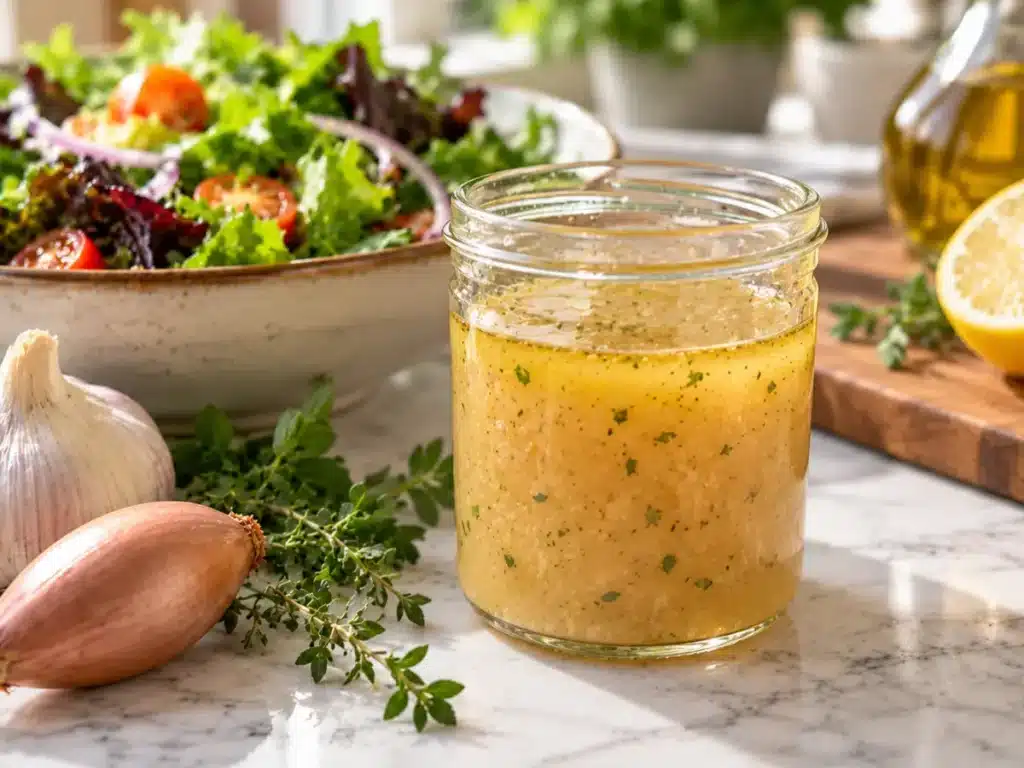
White balsamic Vinaigrette creates a bright, smooth dressing in about five minutes, with gentle acidity, subtle sweetness, and simple pantry ingredients. This homemade vinaigrette tastes fresh without overwhelming delicate greens, vegetables, or grain bowls.
Why You’ll Love This Recipe
- Ready in about five minutes: Simply whisk, taste, and serve.
- Easy pantry ingredients: You only need seven familiar ingredients.
- Versatile flavor: Use this salad dressing on greens, vegetables, grains, or proteins.
I learned to appreciate balanced dressings while cooking in busy professional kitchens, where one sharp ingredient could change an entire plate. At home, I use the same principle. I want enough acidity to wake up fresh ingredients, but I also want sweetness and richness to soften every bite.
This white balsamic dressing captures that balance beautifully. Before whisking everything together, however, it helps to understand a few simple flavor rules that make the final vinaigrette noticeably better.
What to Know Before Making White Balsamic Vinaigrette
A balanced white balsamic Vinaigrette should taste bright and gently sweet, with enough richness to soften the acidity. Because white balsamic vinegar tastes milder than traditional dark balsamic, small adjustments can make a noticeable difference.
First, choose your oil carefully. Extra virgin olive oil adds fruity depth, while a mild olive oil keeps the vinegar flavor more prominent. Taste the oil first because a bitter oil can dominate your homemade vinaigrette.
Next, avoid adding too much oil at once. Whisk it in gradually so the ingredients combine smoothly. Dijon mustard also helps create a more cohesive texture.
Finally, season gradually. Too much salt can hide the vinegar’s delicate sweetness, while excessive honey can make the dressing taste heavy. If the mixture tastes too sharp, add a little more oil or honey. If it tastes flat, add vinegar or salt gradually.
What You Need for This Recipe
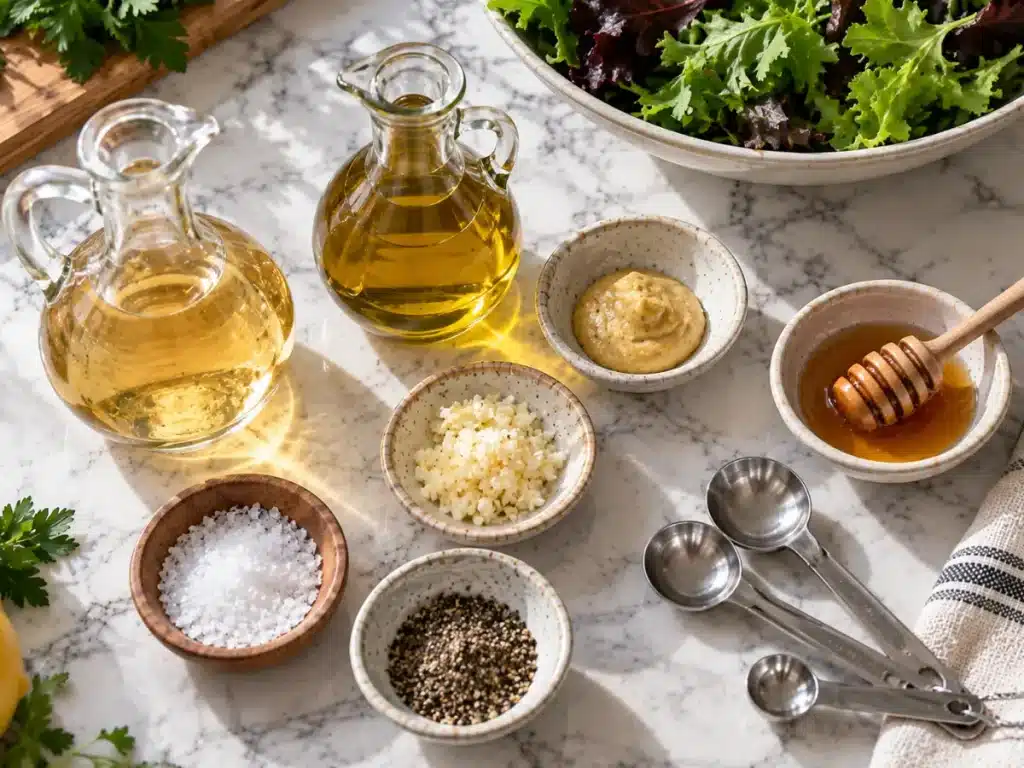
A few simple ingredients give white balsamic Vinaigrette its balanced flavor. Each one contributes acidity, richness, sweetness, seasoning, or texture, so start with good quality ingredients whenever possible.
- 3 tbsp white balsamic vinegar: Provides mild acidity with a naturally gentle sweetness.
- 6 tbsp extra virgin olive oil: Adds richness and creates a smooth consistency.
- 1 tsp Dijon mustard: Adds savory depth and helps the oil and vinegar combine.
- 2 tsp honey: Softens the acidity without making the dressing overly sweet.
- 1 small garlic clove, finely grated: Adds fresh savory flavor.
- 1 quarter tsp fine sea salt: Sharpens and balances the other flavors.
- 1 eighth tsp black pepper: Adds subtle warmth without overpowering the vinegar.
For a vegan version, replace the honey with 2 tsp maple syrup. Maple syrup adds a slightly deeper sweetness, so taste before adding more.
If you cannot find white balsamic vinegar, use 3 tbsp champagne vinegar for a similarly delicate character. Alternatively, use 3 tbsp white wine vinegar. Because both alternatives can taste sharper, add another small amount of honey only after tasting the finished dressing.
Keep the basic proportions consistent at first. Then you can fine tune your white balsamic Vinaigrette after emulsifying it.
How to Make White Balsamic Vinaigrette Step by Step
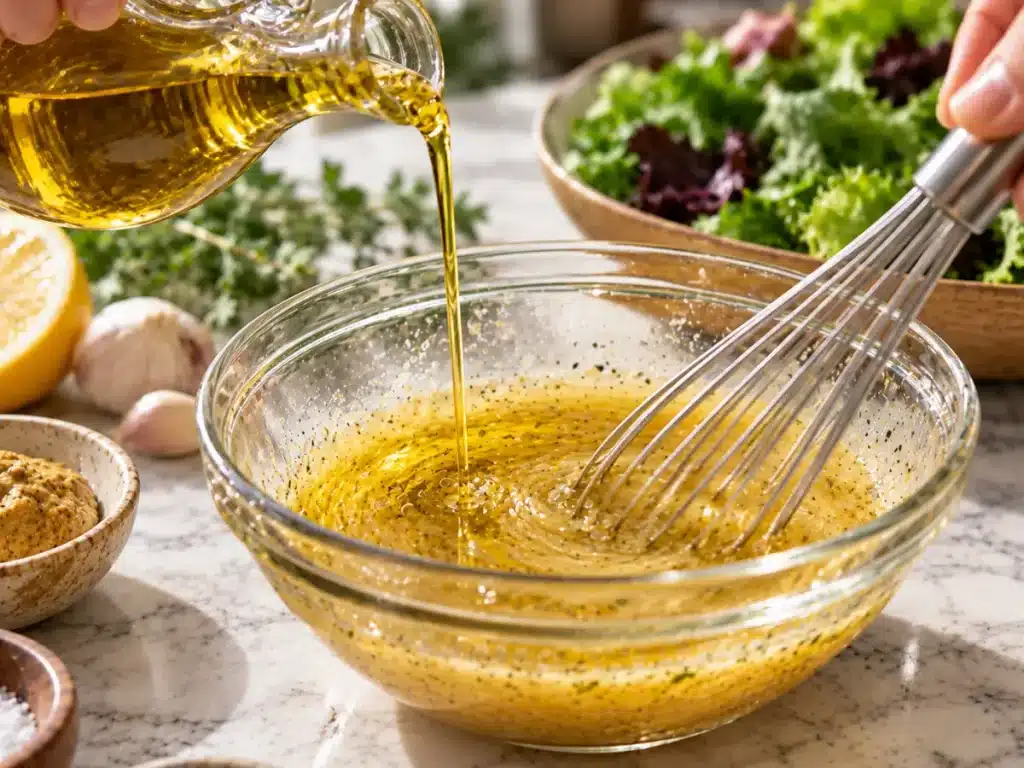
The goal is a smooth, cohesive white balsamic Vinaigrette with balanced acidity and richness. You need no heat, and the entire process takes about 5 minutes at room temperature.
- Build the flavor base. Add 3 tbsp white balsamic vinegar, 1 tsp Dijon mustard, 2 tsp honey, 1 finely grated garlic clove, 1 quarter tsp fine sea salt, and 1 eighth tsp black pepper to a medium bowl. Whisk for about 20 seconds until the honey and mustard dissolve.
- Add the oil gradually. Pour in 6 tbsp extra virgin olive oil in a slow, steady stream while whisking continuously. Continue for about 30 seconds. Gradual mixing helps the oil disperse into tiny droplets and gives this homemade vinaigrette a smoother texture.
- Taste and adjust. Taste the dressing once it looks evenly combined. Add a small splash of vinegar for extra brightness. Add a little honey if the acidity tastes too strong. Adjust salt only after tasting.
- Serve or store. Use the dressing immediately, or pour it into a clean sealed container and refrigerate. If the ingredients separate later, bring the dressing closer to room temperature, then shake or whisk it vigorously before serving.
How to Get the Perfect Flavor
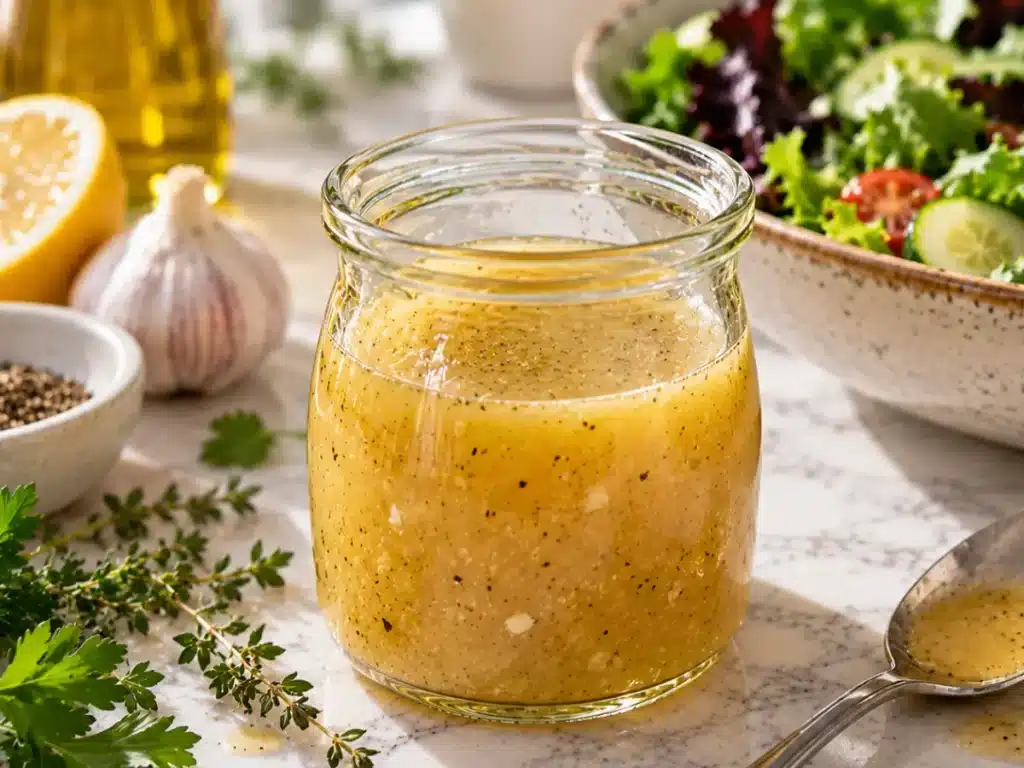
A balanced white balsamic Vinaigrette should taste bright first, followed by gentle sweetness and smooth richness. The salt should sharpen those flavors without becoming noticeable on its own. Meanwhile, garlic and Dijon should create savory depth in the background.
White balsamic vinegar naturally brings softer acidity than many wine vinegars. Therefore, taste before adding extra honey. Your white balsamic dressing should complement food rather than taste sugary by itself.
Dijon mustard also does more than add flavor. It helps disperse the oil throughout the vinegar mixture, which creates a smoother texture. However, homemade dressing can still separate during storage, so simply whisk or shake it again before serving.
Use this quick guide when the balance feels wrong:
| Flavor problem | Likely cause | Adjustment |
|---|---|---|
| Too acidic | Too much vinegar | Whisk in a little oil or honey |
| Too oily | Too much oil | Add a small splash of vinegar |
| Too sweet | Excess honey | Add vinegar gradually |
| Too salty | Excess seasoning | Add oil and vinegar proportionally |
| Flat | Insufficient seasoning | Add a small pinch of salt or vinegar |
Most importantly, make adjustments in small amounts. Taste after each addition because white balsamic Vinaigrette responds quickly to even minor changes.
Easy Ways to Adjust the Flavor
Once you master the basic white balsamic Vinaigrette, you can adjust it easily for different meals. However, change one ingredient at a time so you can control the final balance.
For extra brightness, add fresh lemon juice or chopped parsley. Lemon increases acidity, while herbs add freshness without making the salad dressing heavier.
For a creamier texture, whisk the dressing vigorously for another 30 seconds. You can also blend it briefly. This creates a finer emulsion without adding dairy.
For extra sweetness, add another 1 tsp honey or maple syrup. Alternatively, increase Dijon or garlic slightly when you want a more savory finish. If you enjoy adapting dressings around different nutrition goals, these macro friendly sauces offer more ideas for balancing flavor and portions.
| Variation | Addition | Amount | Flavor result |
|---|---|---|---|
| Brighter | Lemon juice | 1 tsp | Fresh and tangy |
| Herby | Chopped parsley | 1 tbsp | Fresh and aromatic |
| Sweeter | Honey | 1 tsp | Softer acidity |
| Savory | Dijon mustard | 1 half tsp | Deeper, sharper flavor |
For a vegan version, choose maple syrup instead of honey. Finally, remember that oil still provides most of the dressing’s richness, so portion it according to the meal you serve.
How to Use White Balsamic Vinaigrette
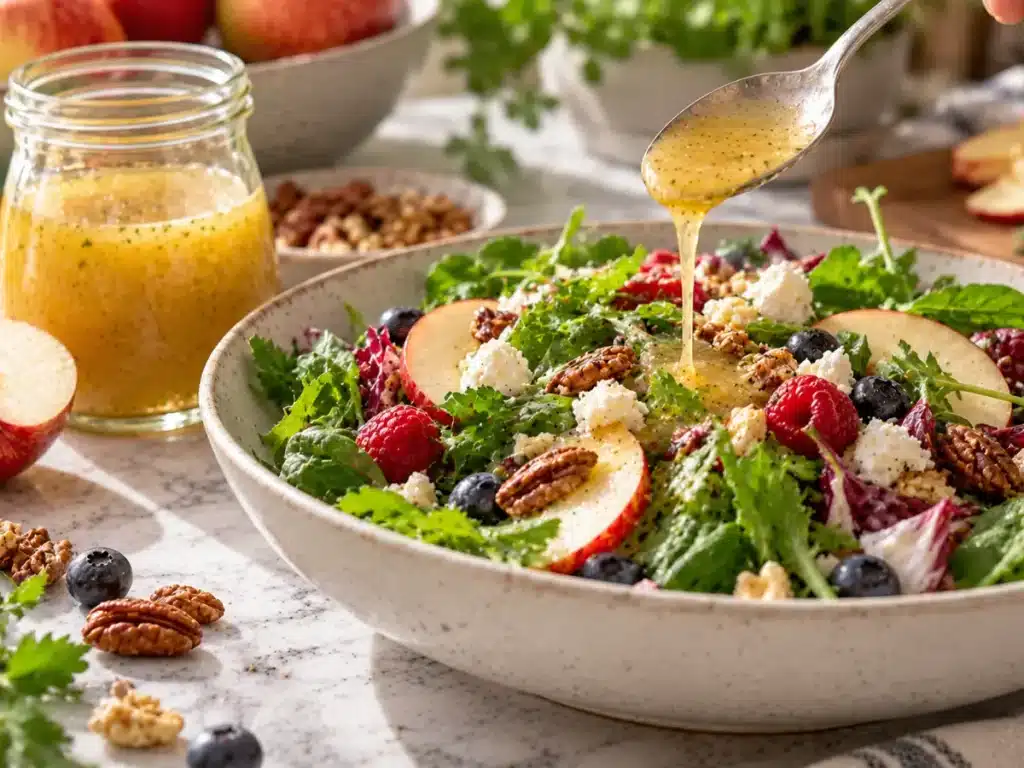
White balsamic Vinaigrette works especially well when you want acidity without the deeper flavor and color of traditional balsamic. For salads, toss it with spinach, arugula, mixed greens, berries, apples, nuts, or mild cheeses. Its gentle sweetness also complements a hearty dense bean salad when you want extra brightness.
You can also drizzle this white balsamic dressing over roasted asparagus, carrots, zucchini, or Brussels sprouts. For grain bowls, spoon it over quinoa, farro, vegetables, and fresh herbs. Start with a small amount, then add more after tossing.
Chicken, shrimp, and fish also pair naturally with this salad dressing. Use it as a finishing sauce, or reserve a separate portion as a marinade before it touches raw protein. For another salmon flavor approach, try this bourbon salmon marinade.
For meal preparation, refrigerate the vinaigrette in a clean sealed container. The oil may thicken when cold, while the mixture can naturally separate. Bring it closer to room temperature briefly, then shake or whisk until smooth again.
Because olive oil provides mainly monounsaturated fat, it contributes most of the fat and energy in this recipe. Therefore, portion the dressing according to your overall meal.
Frequently Asked Questions
What is white balsamic vinaigrette made of?
White balsamic Vinaigrette combines white balsamic vinegar with olive oil, Dijon mustard, honey, garlic, salt, and black pepper. The vinegar provides gentle acidity, while honey adds sweetness. Dijon contributes savory flavor and helps the ingredients combine smoothly. Together, these simple ingredients create a bright, balanced dressing.
What is the difference between balsamic vinaigrette and white balsamic vinaigrette?
Traditional balsamic vinaigrette uses dark balsamic vinegar, which generally brings deeper color and a richer flavor. White balsamic Vinaigrette uses white balsamic vinegar for a lighter appearance and gentler flavor. Therefore, it works especially well when you want acidity and sweetness without darkening delicate salads or vegetables.
What can I substitute for white balsamic vinegar?
Champagne vinegar makes an excellent substitute because its delicate character works well in light vinaigrettes. White wine vinegar also works, although it can taste sharper. Replace the white balsamic vinegar with an equal amount, then taste the finished dressing. Add a little extra honey if you need to soften the acidity.
How long does white balsamic vinaigrette last in the fridge?
Store white balsamic Vinaigrette in a clean, sealed container in the refrigerator. Because this recipe contains fresh garlic, make smaller batches and use them promptly rather than storing them for extended periods. The oil can thicken and separate when chilled. Bring the dressing closer to room temperature, then shake it thoroughly before serving.
Final Thoughts Before You Try It
White balsamic Vinaigrette proves that a flavorful homemade dressing does not need a long ingredient list or complicated technique. In about five minutes, you can create a bright dressing with gentle acidity, subtle sweetness, savory depth, and enough richness to bring everything together.
More importantly, you can make this recipe your own. Add lemon when you want extra brightness. Choose maple syrup for a vegan option. Increase Dijon for more savory character, or add fresh herbs when your meal needs a lively finish.
I love recipes like this because they turn everyday ingredients into something that changes the entire plate. That principle has followed me from professional kitchens to meals shared with family and friends. Simple cooking becomes memorable when every flavor has a purpose.
So grab a bowl and whisk up a batch. Taste as you go, adjust with confidence, and use your white balsamic Vinaigrette anywhere a meal needs a fresh, flavorful finishing touch.
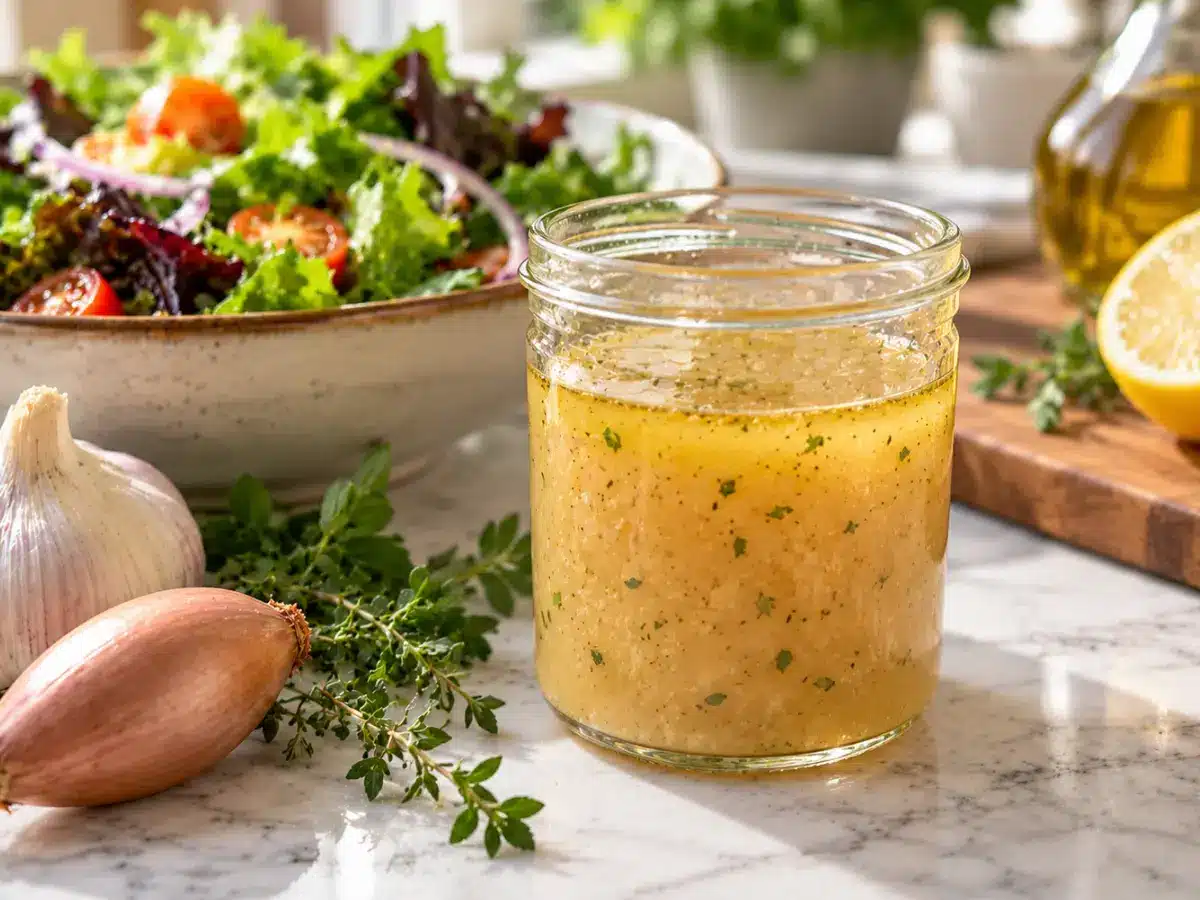
White Balsamic Vinaigrette
Ingredients
Method
- Build the flavor base. Add 3 tbsp white balsamic vinegar, 1 tsp Dijon mustard, 2 tsp honey, 1 finely grated garlic clove, 1 quarter tsp fine sea salt, and 1 eighth tsp black pepper to a medium bowl. Whisk for about 20 seconds until the honey and mustard dissolve.
- Add the oil gradually. Pour in 6 tbsp extra virgin olive oil in a slow, steady stream while whisking continuously. Continue for about 30 seconds. Gradual mixing helps the oil disperse into tiny droplets and gives this homemade vinaigrette a smoother texture.
- Taste and adjust. Taste the dressing once it looks evenly combined. Add a small splash of vinegar for extra brightness. Add a little honey if the acidity tastes too strong. Adjust salt only after tasting.
- Serve or store. Use the dressing immediately, or pour it into a clean sealed container and refrigerate. If the ingredients separate later, bring the dressing closer to room temperature, then shake or whisk it vigorously before serving.
Nutrition
Notes
For a vegan version, replace the honey with 2 tsp maple syrup. If you cannot find white balsamic vinegar, use 3 tbsp champagne vinegar or 3 tbsp white wine vinegar. Because the alternatives can taste sharper, add another small amount of honey only after tasting the finished dressing.